Built in North Carolina. Trusted Nationwide.
If you want laser cutting services that deliver accuracy, speed, and American-made reliability, US Metal Crafters is the partner you call.
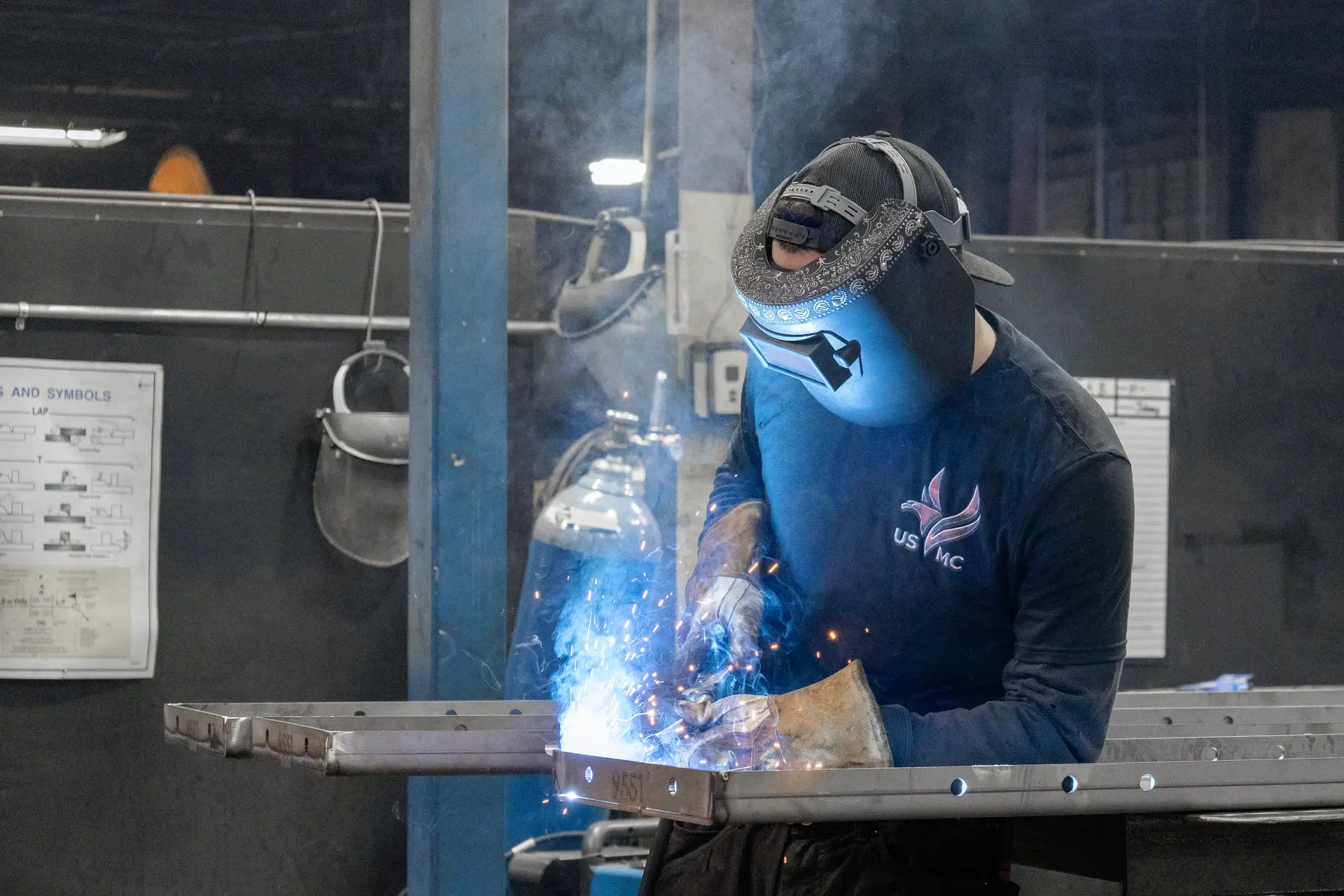
In its simplest terms metal crafting, otherwise known as metalworking, is the process of creating or fashioning metal parts and objects. It gets a bit more complicated as you get into how these parts and objects are actually created. Through my journey to learn more about metal crafting, I discovered there are A LOT of ways to fashion metal…which was a bit overwhelming at first. To help trim things down and understand the “important stuff,” I dove into researching the main processes of metal crafting. I’ve broken it down below and created a quick “Metal Crafting Guide for Dummies” based on my learnings.
Metal Crafting experts— Do you have a family member or friend who never quite understands exactly what you do? Share this blog post with them, and problem solved!
I discovered that there is a hierarchy of metal crafting that begins with a group of main processes with a larger number of sub-processes (or techniques) that fall within the main process. The three main processes in metalworking are forming, cutting, and joining. I’ll briefly cover these processes and some of the main techniques that allow each process to be accomplished below.
The number one thing I learned about forming is that it is only a process of reshaping, and no material is gained or lost. There two types of forming: hot or cold working processes. The process chosen is typically based on the metal type and end product goal. Bending and forging are two of the oldest metal crafting forming techniques.
It is often a cold working process but can be hot. It is typically used to create a desired geometric shape and to remove sharp edges.
I’m sure you think forging must be a hot process. Well…drumroll…it can also be cold. Forging is just utilizing compression to shape metal. Forged parts are touted for their strength.
Cutting, in its simplest terms, is taking an object and removing parts to make a new shape. Think about those snowflake paper projects. For cutting metal, it's pretty much the same as your grade school project, but the tool by which the cutting is completed is very different, and there are several variations for cutting.
I was surprised to discover that when lasers were created, an entirely new form of energy was developed. The laser cutting process is typically automated and allows for elaborate and detailed cuts that are exact, easily cutting through metal as if it were butter.
Think about the wood saw used for that DIY pallet wall you saw on HGTV. It’s the same concept for blade cutting metal, but the blade itself is typically much stronger and often requires water as part of the process to keep the metal cool and to help extend the life of the blade.
Your earth science courses taught you about the power of water and erosion; think Grand Canyon. Water jet cutting harnesses the power of water into a high-powered jet that allows the metal to be cut through easily.
It is exactly what it sounds like. Joining is the process of bringing multiple materials together. Joining can be temporary or permanent. These joining processes include bolting & screwing, clamping, soldering, brazing, welding, and more. Welding is distinct in that it melts both the base metal and the metal that is being joined.
This type of welding uses, yep, you guessed it, gas…but also oxygen to weld or melt both materials together. Typically a torch is used to direct the heat at the joining point.
An electrical arc is used to create intense heat, which is hot enough to melt both metals so that they can melt together and then form a strong joining point as it cools.
Now you are an expert on the three processes of metal crafting: forming, joining, and cutting. Hopefully learning more about each of the main processes of metal crafting sparked your interest. If you're like me, and you want to keep digging in and learning more, I’ve included a list of some of the best resources I came across during my research for each process.