Built in North Carolina. Trusted Nationwide.
If you want laser cutting services that deliver accuracy, speed, and American-made reliability, US Metal Crafters is the partner you call.
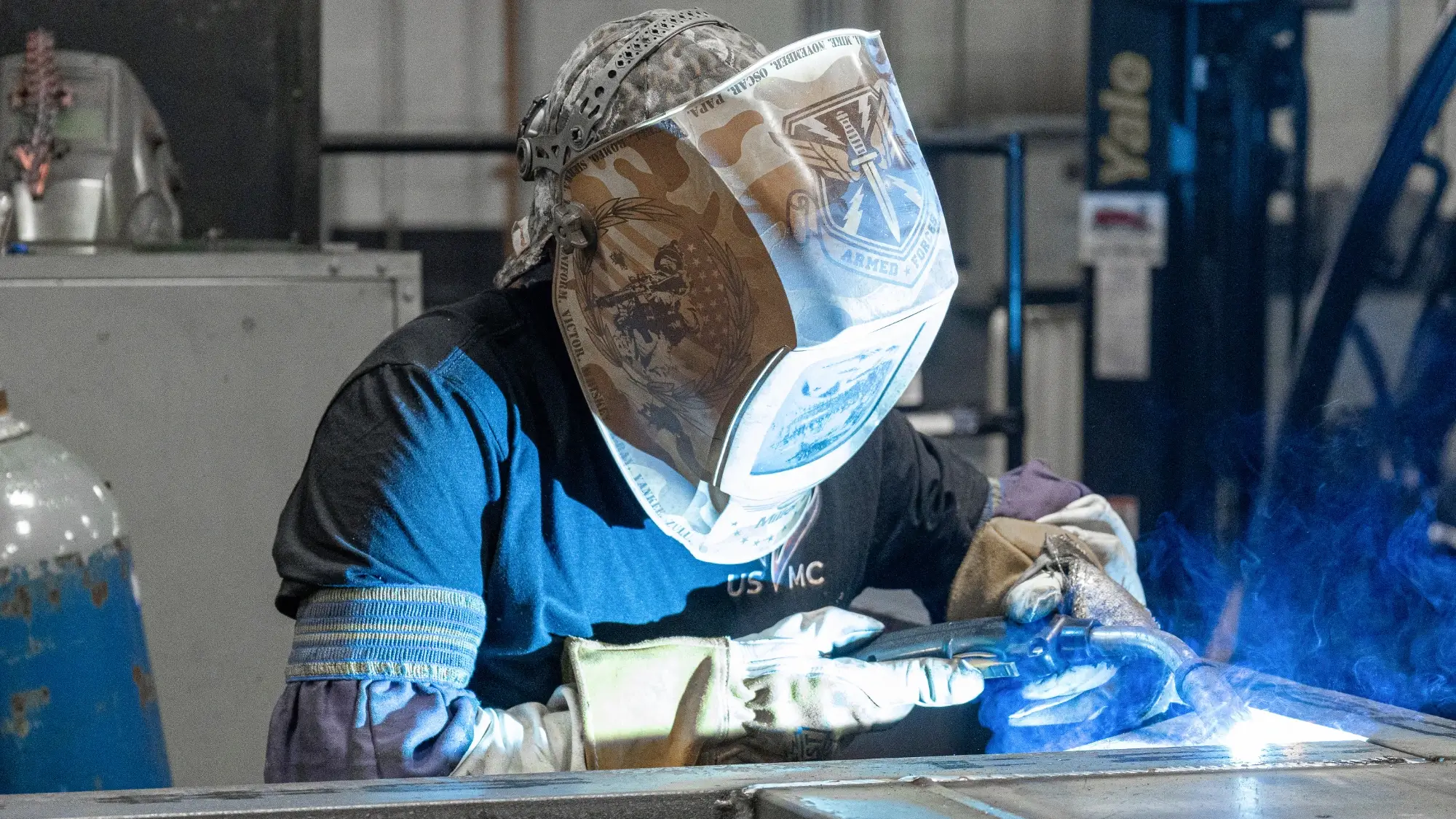
Welding isn’t just a box to check or a heat-and-go moment. The welding method you choose affects how a part performs in the real world. How it looks, how strong it is under stress, and how well it stands the test of time. Whether we’re talking MIG, TIG, or spot welding, or deciding between robotic and manual welding, the mission stays the same: pair the process with the purpose.
Let’s break it down.
MIG welding is the dependable workhorse. It runs a steady wire feed with shielding gas, keeping the weld clean and controlled. It’s quick, consistent, and strong.
General fabrication, high-volume production
Carbon steel, stainless steel, aluminum
Fast, versatile, easy to automate
Strong welds with very little cleanup
If you need reliable output and solid repeatability, MIG is the call. It shines in medium to high-volume production where efficiency matters. And when we run MIG through our robotic welders? Consider that efficiency turbocharged.
If MIG is the workhorse, TIG is the craftsman. TIG welding delivers precision and a clean finish. The control is finer, the finish tighter, and the results speak for themselves. We’ve got welders who take real pride in their work.
Aerospace components, medical-grade work, food-safe stainless, visible or ornamental welds
Carbon steel, stainless steel, aluminum
Precision, clean professional finish
Smooth, polished welds with minimal touch-up
TIG is used when detail matters, when the weld will be seen, judged, or tested by exacting standards. It’s finesse over force.
Spot welding is all about speed and structural reliability. No filler here, just pressure and current bonding metal at key contact points. It’s efficient, repeatable, and built for volume.
Sheet metal assemblies, appliance panels, automotive components
Mostly steel sheet
Fast, cost-effective, repeatable
Strong joints that are often hidden inside the assembly
This is our go-to for products that need consistent structural integrity at scale.
A well-equipped shop uses both. The right choice comes down to part volume, variation, complexity, and finish requirements.
Our robotic welding cells, including our Yaskawa YRC1000 with AR-series robot and Capital Robotics Fusion Arc 200-L, stand out at repeatable welds with programmed consistency. They can run two to five times faster than manual welding, depending on the complexity of the part or component.
Why robotic welding works:
Best For: Identical parts, large batches, and components that need predictable precision.
Robots have speed, but humans have judgment. Our welders adapt to shifting tolerances, troubleshoot complex assemblies, and bring craftsmanship where nuance matters.
Why manual welding matters:
Best for: Custom fabrication, prototype builds, and parts that require fine detail and precision.
There’s no correct method that fits every job. At USMC, we select welding techniques based on material, function, timeline, and finish. That means every part gets the approach that ensures strength, performance, and quality.
Whatever the job calls for, we’re ready. Fully tooled, fully trained, and fully committed to getting it built to spec and delivered on time. Contact us about your welding needs here.